Spreadsheets are brilliant tools.
Almost every manufacturer or wholesaler in the UK starts their product catalogue in Excel. It’s familiar, flexible and quick to set up. In the early days, it works perfectly well.
But as your product range grows, your sales channels expand and your team gets bigger, spreadsheets quietly start turning into a problem.
Product information becomes scattered across files. Updates take longer. Mistakes creep in. And what once felt organised begins to feel… chaotic.
If you’re wondering whether your business has reached that point, here are seven clear signs you need product management software.
Sign #1: You Have Multiple Versions of the Same Spreadsheet with No Clear Master
It usually starts innocently.
Someone saves a new version of the catalogue:
Product_List.xlsx
Product_List_NEW.xlsx
Product_List_FINAL.xlsx
Product_List_FINAL_FINAL.xlsx
Soon there are several versions floating around email inboxes, shared drives and desktops.
When someone asks for the latest catalogue, the real question becomes: which one is actually correct?
This leads to endless small investigations:
Who updated pricing last week?
Did marketing change the product descriptions?
Is this the file with the new SKUs?
Individually these moments seem harmless. But collectively they drain time and create uncertainty.
When your team no longer trusts the catalogue file, you’ve already lost control of your product data.
Sign #2: Updating Product Data Takes a Full Day (or More)
Updating a spreadsheet should take minutes.
Yet somehow it becomes an entire day’s work.
A typical product update process might look like this:
change prices in the main spreadsheet
update the dealer price list
adjust the website product file
modify the distributor catalogue
double-check formulas haven’t broken
By the time the updates are complete, half the day has disappeared.
This usually happens when spreadsheets evolve into mini databases without actually being designed for that role.
Your team ends up spending hours doing repetitive updates simply to keep data consistent across files.
The real cost isn’t just time — it’s the opportunity cost of what your team could have been doing instead.
Sign #3: Dealers Are Regularly Ordering at Wrong or Outdated Prices
This one often reveals itself through awkward emails.
A dealer places an order based on a price list you sent three months ago.
But the prices changed last month.
Now your sales team must explain:
“Sorry, those prices are outdated.”
Best case scenario, the dealer accepts the correction.
Worst case scenario, the dealer feels misled.
Outdated price lists can create real problems:
margin losses
customer frustration
delayed orders
unnecessary back-and-forth communication
And the root cause is almost always the same: static spreadsheets being emailed around.
Once a spreadsheet leaves your inbox, you lose control of it.
If outdated price lists keep resurfacing, your catalogue system is already stretched beyond its limits.
Sign #4: You Can’t Search or Filter Your Product Range Quickly
Imagine a dealer asking a simple question:
“Do you have stainless steel kitchen knives under 20cm?”
You open the spreadsheet.
You scroll.
You scroll some more.
You try filtering by category, but the categories aren’t consistent. Some products say “Kitchen”, others say “Kitchenware”, and a few say “Utensils”.
Eventually you find the product… five minutes later.
Now multiply this across hundreds or thousands of SKUs.
Spreadsheets were never built to handle large product catalogues elegantly.
When searching your catalogue becomes slow or frustrating, it’s not just inconvenient — it slows down sales conversations and makes your business look less organised.
Sign #5: Adding a New Product Means Updating Five Different Files
Launching a new product should feel exciting.
Instead it often feels like admin.
The process might involve updating:
the master product spreadsheet
the dealer price list
the website upload file
the distributor catalogue
the internal sales sheet
Miss one file and suddenly something is wrong somewhere.
The website may display outdated information.
Dealers might not see the product yet.
Sales teams might not even know it exists.
This kind of fragmented workflow is a classic sign that spreadsheets are being pushed far beyond their intended use.
Product data should live in one central place, not five different documents.
Sign #6: Your Sales Team Is Working from Different Versions of the Catalogue
Your sales team needs accurate product information to do their job properly.
But when everyone is using different spreadsheets, consistency disappears.
One salesperson may quote from an older catalogue.
Another may use a newer version.
A third might have their own edited version saved locally.
The result?
Different customers receive different information about the same product.
This leads to:
pricing confusion
inconsistent messaging
internal misalignment
It also undermines the professionalism of your sales process.
If your sales team constantly asks, “Is this the latest file?”, that’s a strong indicator your catalogue management system needs an upgrade.
Sign #7: You Dread Launching a New Product Line
New product launches should be exciting milestones.
But if your catalogue lives in spreadsheets, they can feel stressful instead.
Launching a new line might require:
adding dozens of new SKUs
updating multiple spreadsheets
adjusting dealer price lists
sending updated files to distributors
ensuring the website data matches
Even small mistakes can cause problems.
A missing attribute here. An incorrect SKU there.
Suddenly your team is firefighting catalogue issues instead of promoting the new product.
When launching new products feels like a logistical nightmare rather than a business opportunity, it’s usually because the underlying catalogue system isn’t built to scale.
What All These Signs Have in Common
If you recognised several of these scenarios, your business is probably experiencing the same underlying issue:
Spreadsheets are trying to do the job of a proper product management system.
Spreadsheets are excellent tools for analysis and quick data entry. But they struggle when used as the central system for managing:
large product catalogues
multiple sales channels
dealer price lists
product variants and attributes
Eventually they become fragile and difficult to maintain.
That’s when many manufacturers and wholesalers start looking for product management software designed specifically for product catalogues.
A Better Way to Manage Your Product Catalogue
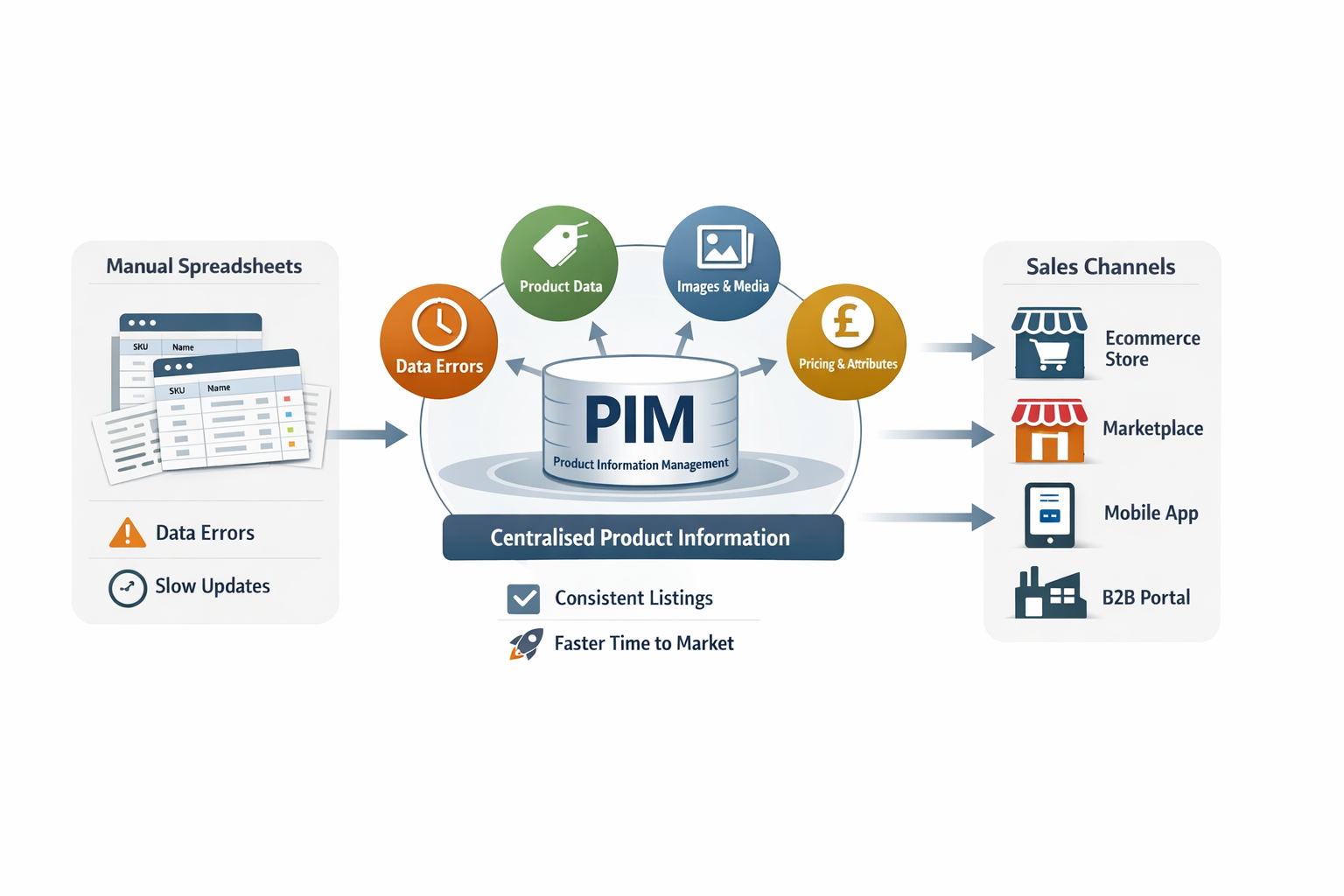
Modern product catalogue platforms centralise all product data into a single organised system.
Instead of juggling multiple spreadsheets, your team works from one structured catalogue.
This means:
product updates happen once
dealers always see current pricing
sales teams access the same data
new products can be launched faster
If several of the signs above sound familiar, it may be time to move beyond spreadsheet-based product management.
Platforms like productrue help UK manufacturers and wholesalers organise their product catalogue, manage pricing and share accurate product information across teams and partners.
You can explore how it works at productrue.com.